Put simply, very little work remains between the moment a staff member has the activity and the moment children are meaningfully doing it. That is the whole test. It is about remaining work, not about the activity's format, length, or subject.
The confusion
Why the term gets confused with enrichment vendors
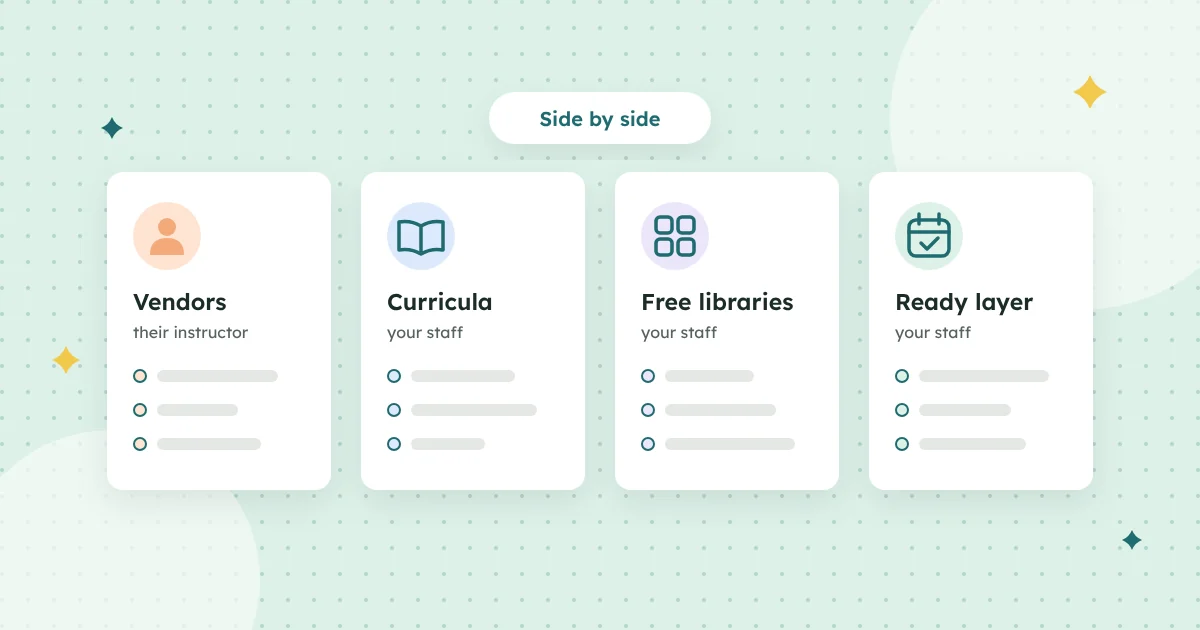
Search for plug-and-play enrichment and most answers point to enrichment vendors: companies that send a trained instructor to your site with their own curriculum and materials for a scheduled block. That is plug-and-play for the program director, because the booking takes care of everything. It is not plug-and-play for your staff, because your staff are not running anything. The instructor is.
On the days the instructor is not there, the booking does nothing for you. Plug-and-play enrichment, in the sense defined here, is about what your own team can deliver with the time, people, and materials actually present that afternoon.
See how vendors and a plug-and-play layer work together.
What it is not
What plug-and-play enrichment is not
- Not low-prep. A worksheet can be low-prep for the person who wrote it and still require your staff member to choose it from a hundred options, judge whether it fits the group, and work out how to make twenty minutes of it worthwhile. Low prep for the author is not low remaining work for the person delivering.
- Not downloadable. A resource being available for download says nothing about what happens after the download. Available is not the same as ready.
- Not an instructor visit. If someone else has to arrive for enrichment to happen, it is a booking, not plug-and-play enrichment. The point of plug-and-play is that the people already in the room can run it.
- Not filler. An activity that only occupies children is not enrichment because it was easy to start. Plug-and-play has to be easy to run and worth running at the same time. Neither one alone qualifies.
Available vs. ready
Available is not ready
An activity is available when your program has it: in the binder, the shared drive, the subscription, or the search results. An activity is ready when a specific staff member, with the time and materials they actually have, can move from holding it to running it with this group, today.
Most enrichment resources are abundant in availability and scarce in readiness. Adding more content increases what is available and does nothing about the work standing between availability and readiness. It can make that work larger, because a bigger library means more to search and judge before anything runs.
The test
A five-minute test you can run on anything
Once today's activity has been identified, can a realistic staff member, including a new hire or a substitute, be ready to run it well in about five minutes?
Printing a page or switching on a projector fits inside that budget. Choosing from a menu, gathering or buying special materials, building stations, or reading a long plan breaks it. If the clock has to start with searching a library and choosing, the resource has not reached the starting line.
Five minutes is a rule of thumb, not a scientific threshold. Its value is that it makes the hidden work visible in minutes a staff member can feel. Use it on any resource, activity bank, or vendor before you commit to it.
Want activities that pass it? See twelve no-prep enrichment ideas.
Two layers
Where plug-and-play enrichment fits
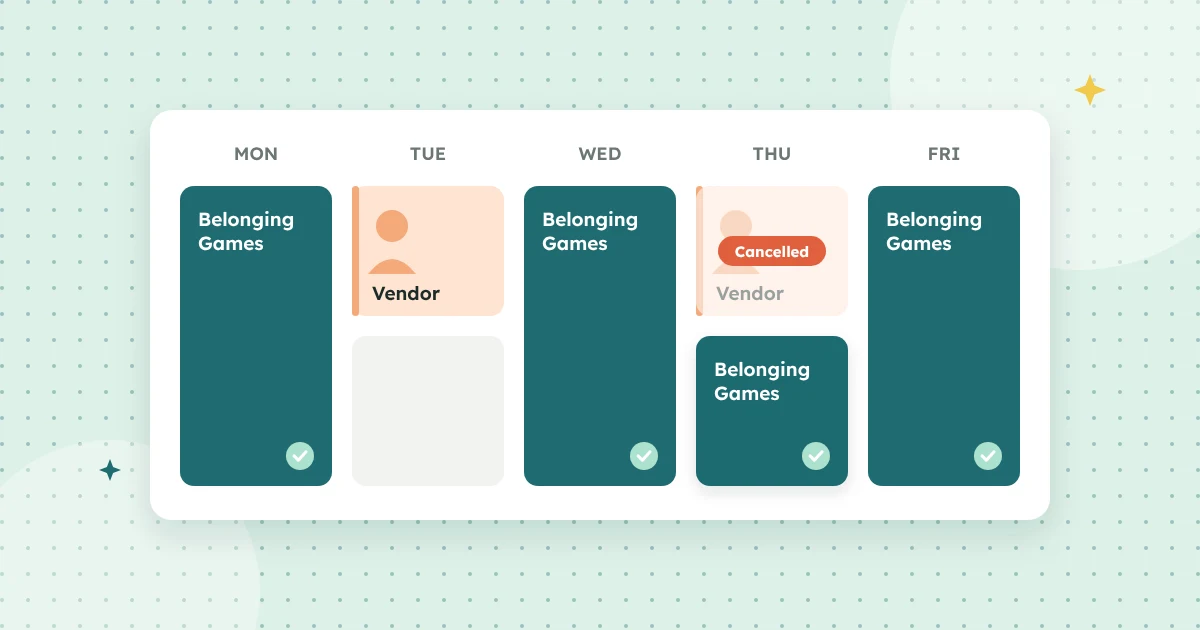
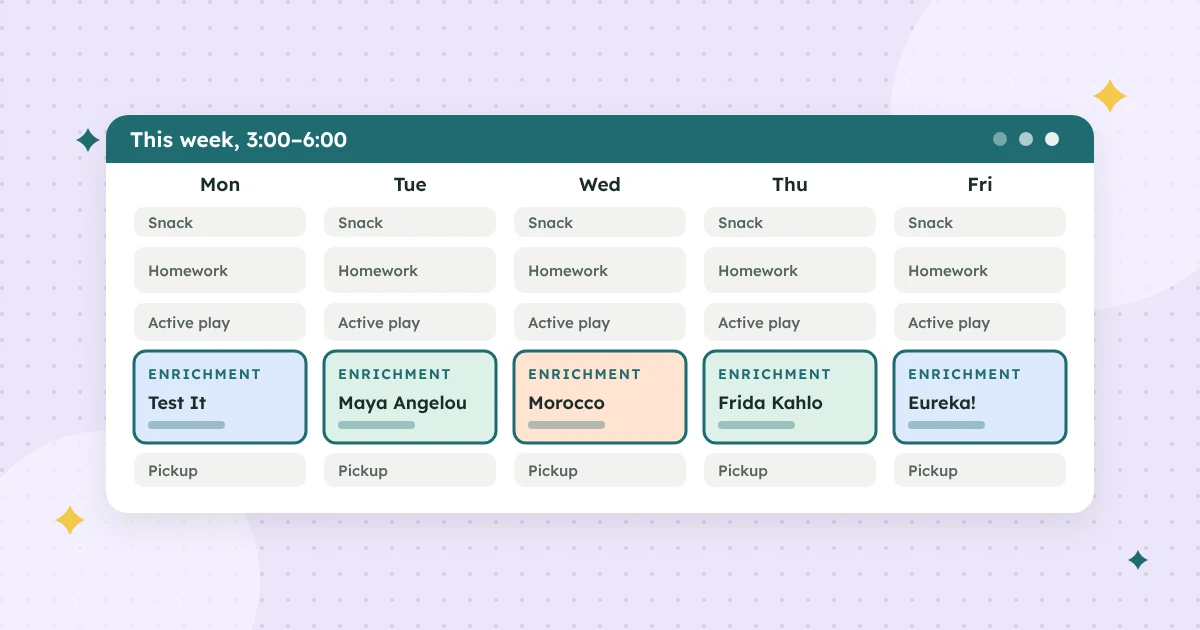
A strong after-school program has two layers of enrichment. Layer 1 is planned programming: your curriculum, your clubs, your specialists, your vendors, your schedule. It is designed around what you intend to happen. Layer 2 is ready enrichment your own staff run every day: the daily enrichment block around and between the planned programming. It is also what holds when the plan cannot proceed as intended: a staff call-out, a cancelled club, rain, a homework block that ends early, a vendor who does not show.
Those moments are not rare. They happen most weeks in most programs. Layer 2 has to be made of plug-and-play enrichment, because it runs every day with whoever is on the floor, and in the hardest moments there is no time for anything else. The two layers are complementary. One builds depth in the hours you plan. The other makes every afternoon meaningful, including the ones that do not go as planned.
Example
An example: Belonging Games
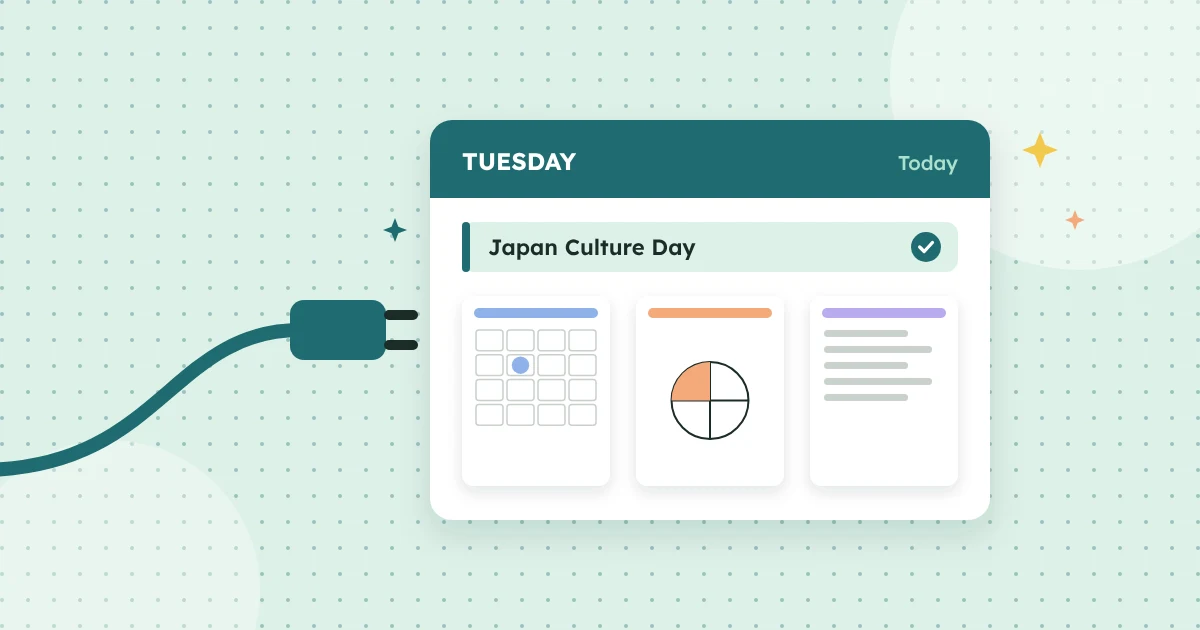
Belonging Games, by Enrilo, is a daily, plug-and-play enrichment service for elementary after-school programs. Each day, educators receive 1–3 curated events across cultural, SEL, and STEM themes through their existing Google or Outlook calendar. Every event includes complete, ready-to-run activities (an educator guide, 7 printables, 3 projector activities, and a certificate) that their own staff can lead without planning or preparing from scratch. It gives staff something meaningful to run every afternoon, and the same events are there when the day changes: a staff call-out, a cancelled club, rain, homework finishing early.
It is built as Layer 2. Programs keep their curriculum, clubs, and vendors and add Belonging Games as their daily enrichment, for every afternoon those do not cover.
The definition on this page is Enrilo's. Read the full article, Defining plug-and-play enrichment in after-school programs, and the glossary of related terms.
Running an ELO-P program? See what ELO-P requires and the no-prep options that fit.
FAQ
Questions
Is plug-and-play enrichment the same as an enrichment vendor?
No. An enrichment vendor sends an instructor to run a scheduled block with their own materials. Plug-and-play enrichment is enrichment your own staff can run, with no outside instructor, on any day including the days nothing was booked. Many programs use both.
Is plug-and-play enrichment the same as low-prep or no-prep activities?
No. Low-prep describes the activity. Plug-and-play describes how much work remains for the person delivering it: finding it, judging whether it fits, printing it, gathering materials, and adapting it for the group. An activity can be low-prep and still fail that test.
Does plug-and-play mean staff do nothing?
No. It removes the repetitive work around the activity: searching, choosing, preparing, and adapting. It keeps the part that matters, a caring adult leading the experience well. Facilitation is where much of the value lives.
How do I know if a resource is plug-and-play?
Use the five-minute test. Once the day's activity is identified, can a new or substitute staff member be ready to run it well in about five minutes, with what is on hand? If they first have to search, choose, shop, or read a long plan, it is not.
Is Belonging Games plug-and-play enrichment?
Yes. Every day's 1–3 events are already curated and already in the team's calendar, with printable and projector-ready activities and a short educator guide. Staff open it, print or project it, and run it, with no planning, no prep, and no outside instructor.
Who defined the term this way?
Enrilo, the company behind Belonging Games. The term is used loosely across the field, so Enrilo published a precise definition in Enrilo Publications. It is a proposed standard any program can apply to an activity, a curriculum, or a vendor, whether or not they buy anything.