What it is
What ELO-P is
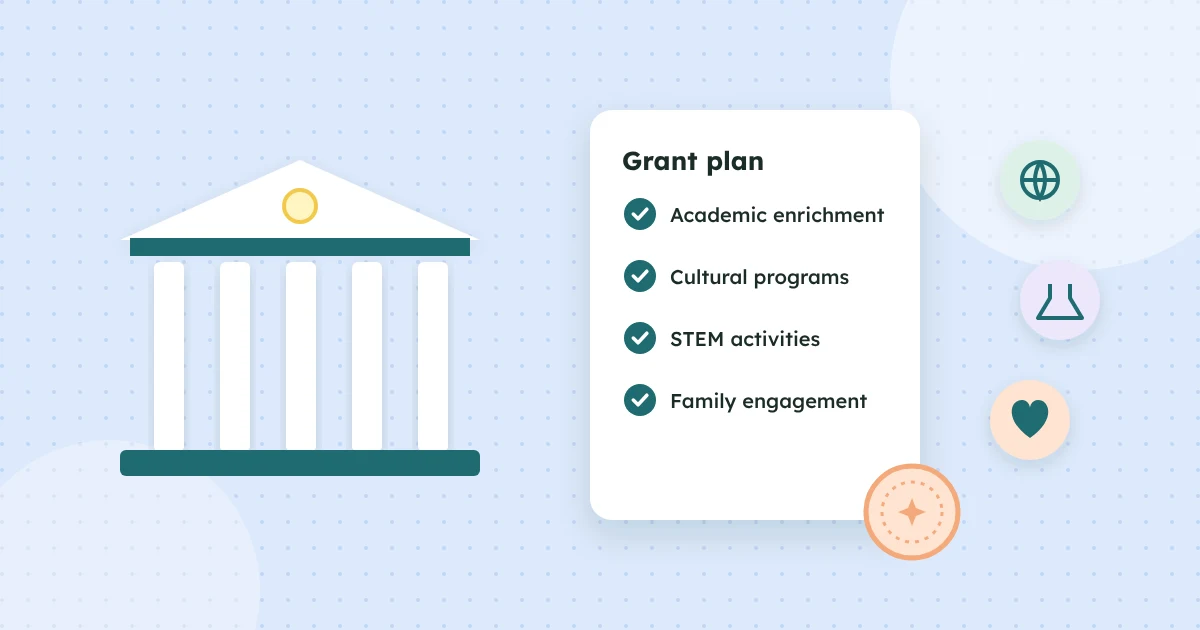
ELO-P is established by California Education Code Section 46120. The California Department of Education describes it as funding for "afterschool and summer school enrichment programs for transitional kindergarten through sixth grade." The money goes to local educational agencies (school districts, county offices of education, and charter schools), which run the program themselves or contract with a community partner to operate it.
The statute is explicit about what the time is for. "Expanded learning opportunities" does not mean "an extension of instructional time, but rather, opportunities to engage pupils in enrichment, play, nutrition, and other developmentally appropriate activities." Education Code Section 8482.1 defines expanded learning as programs "that focus on developing the academic, social, emotional, and physical needs and interests of pupils through hands-on, engaging learning experiences."
Requirements
What ELO-P requires of the after-school day
| Requirement | What the law says | Source |
|---|---|---|
| Who must be offered access | Beginning in 2023-24, access must be offered to all pupils in classroom-based transitional kindergarten through grade 6 programs, plus any pupil whose parent or guardian requests placement. LEAs in certain funding tiers must offer access to all unduplicated pupils (English learners, foster youth, and low-income pupils). | EC 46120(b) |
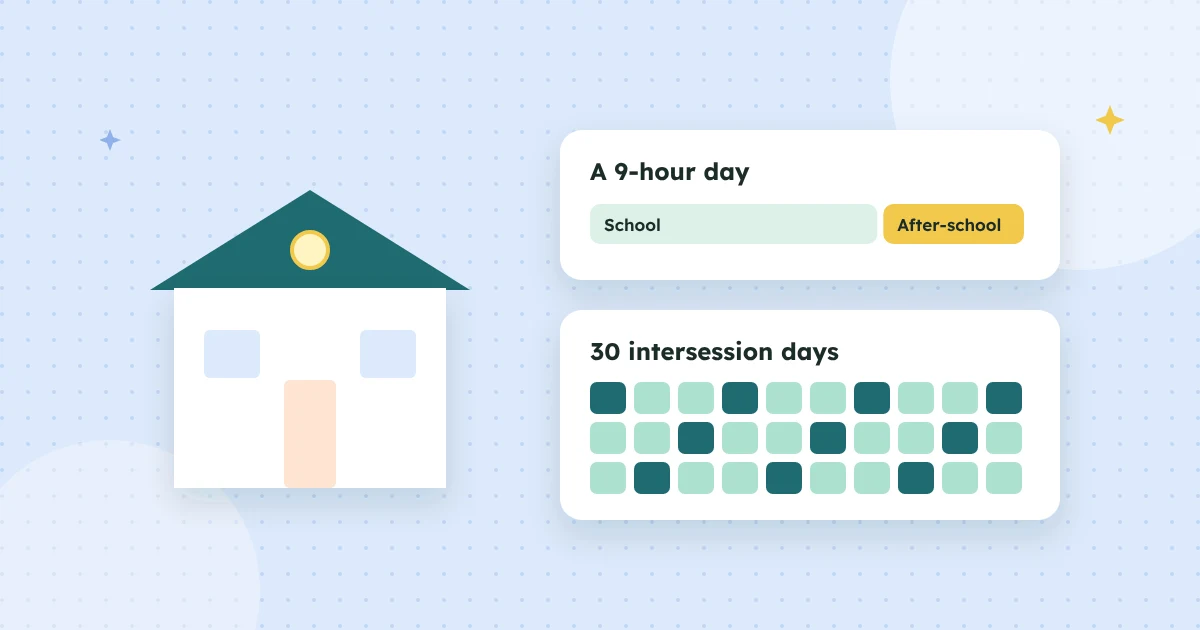
| Hours on school days | In-person before- or after-school expanded learning that, added to instructional minutes, recess, and meals, totals no less than nine hours per instructional day. | EC 46120(b) |
| Non-school days | At least 30 non-school days (summer and intersession) with no fewer than nine hours of in-person expanded learning per day. | EC 46120(b) |
| Staff ratios | No more than 20 pupils per staff member, and no more than 10 to 1 for transitional kindergarten and kindergarten. | EC 46120(b); CDE Program Plan Guide |
| What the time is for | Enrichment, play, nutrition, and other developmentally appropriate activities. Not an extension of instructional time. | EC 46120(g) |
| Program plan | Each LEA writes an ELO-P program plan organized around the Quality Standards for Expanded Learning in California, including Active and Engaged Learning and Skill Building. | CDE Program Plan Guide (Nov 2024) |
Two of the point-of-service Quality Standards describe what the enrichment itself has to be. Active and Engaged Learning: "Program design and activities reflect active, meaningful and engaging learning methods that promote collaboration and expand student horizons." Skill Building: "The program maintains high expectations for all students, intentionally links program goals and curricula with 21st-century skills and provides activities to help students achieve mastery."
The reality
What those rules mean on the ground
A nine-hour day means roughly three hours after dismissal, every school day, for every child who enrolls. Thirty non-school days at nine hours each is 270 hours of programming with no school day underneath it. At 20 to 1, a site serving 100 children needs at least five staff members in the room every afternoon, and those staff are often part-time, new this year, or covering for someone else.
Every one of those hours has to be enrichment: hands-on, engaging, and worth a child's time. A worksheet or a video fills the hour and fails the standard. That is the design problem ELO-P sets for a program leader. The program needs enough meaningful activity to cover an enormous number of hours, run by whoever is actually in the room, under conditions that change most weeks.
Read why staffing is a design constraint, not a training problem.
The options
The no-prep enrichment options programs use
When program leaders look for "no-prep" or "plug-and-play" enrichment, the answers they get are usually of two kinds, and they solve different problems.
| Option | Who runs it | Prep for your staff | Hours it covers |
|---|---|---|---|
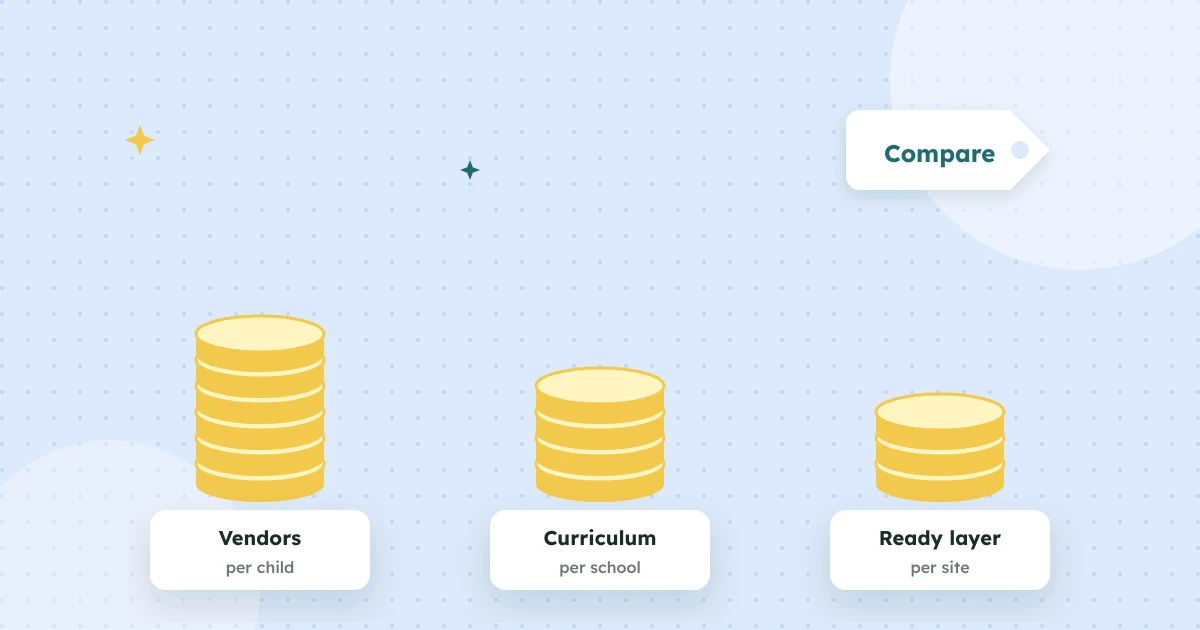
| Enrichment vendors (science, LEGO engineering, coding, cooking, music, and similar) | The vendor's instructor, who comes to your site | Supervision only | The scheduled block, usually 45 to 90 minutes, on booked days |
| Curriculum and activity libraries | Your own staff | Searching, choosing, printing, gathering materials, adapting for the group | The hours your staff have time to plan for |
| A plug-and-play enrichment layer (Belonging Games) | Your own staff, including new, substitute, and part-time staff | None. Open, print or project, run | Every afternoon of the year, including the days a vendor is not there |
A vendor is no-prep for the program director, because the booking takes care of everything. On the days the instructor is not there, it covers nothing. A library is abundant, but someone still has to search it, choose, print, and prepare, and that work lands on staff at four in the afternoon. A plug-and-play layer is the only one of the three that removes the preparation from your own staff's hands and covers every day.
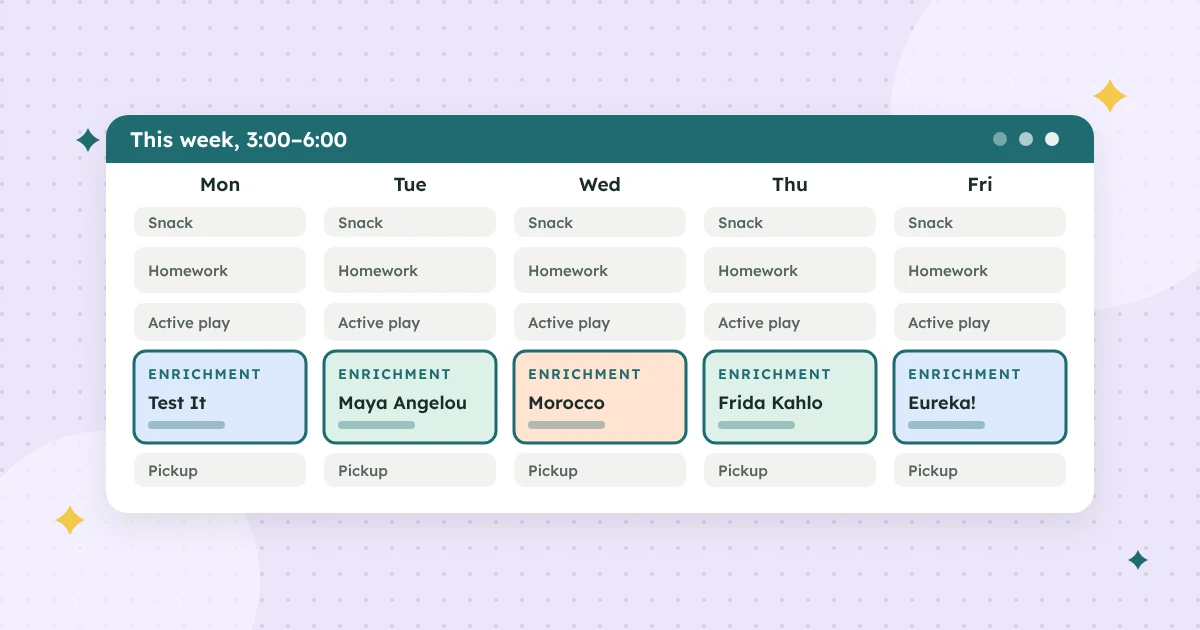
Most ELO-P programs end up with two layers. Layer 1 is the planned programming: curriculum, clubs, and vendors, designed around what the program intends to happen. Layer 2 is ready enrichment your own staff run every day: the daily enrichment block around and between the planned programming, which also holds when the plan cannot proceed, such as a staff call-out, a cancelled club, rain, a homework block that ends early, or an intersession day with nine hours to fill. The two are complementary.
See how vendors and Belonging Games work together, and the full definition of plug-and-play enrichment.
Belonging Games
How Belonging Games fits an ELO-P program
Belonging Games, by Enrilo, is a daily, plug-and-play enrichment service for elementary after-school programs. Each day, educators receive 1–3 curated events across cultural, SEL, and STEM themes through their existing Google or Outlook calendar. Every event includes complete, ready-to-run activities (an educator guide, 7 printables, 3 projector activities, and a certificate) that their own staff can lead without planning or preparing from scratch. It gives staff something meaningful to run every afternoon, and the same events are there when the day changes: a staff call-out, a cancelled club, rain, homework finishing early.
Each day's event introduces children to a culture, tradition, country, or celebration through activities they do with their hands and with each other, which is the kind of active, engaged learning and skill building the Quality Standards describe. It is enrichment, not instruction, so it fits what the statute says the time is for. It runs every school day and every intersession day, and it is built for the staff member who is actually in the room, which is how a program keeps the 20 to 1 ratio staffed with people who can lead something meaningful on short notice.
Belonging Games is licensed per site for one annual price that covers every educator and every student at that site. Invoices and purchase orders are accepted. Programs funded through ELO-P and 21st CCLC use it as one line item for a complete enrichment layer. Whether a given expense fits your LEA's ELO-P plan is your LEA's decision; the plan guide and your county office of education's expanded learning lead are the right places to confirm it.
See pricing and the 30-day pilot.
Funded through 21st CCLC instead? See what 21st CCLC funds and requires.
FAQ
Questions
Does ELO-P require enrichment or academic instruction?
Enrichment. Education Code Section 46120 says expanded learning opportunities do not mean an extension of instructional time, but opportunities to engage pupils in enrichment, play, nutrition, and other developmentally appropriate activities. Programs may support the school day, but the CDE plan guide asks that they not duplicate it.
Which students does an ELO-P program have to serve?
Beginning in 2023-24, LEAs must offer access to all pupils in classroom-based transitional kindergarten through grade 6 programs, plus any pupil whose parent or guardian requests it. LEAs in certain funding tiers must offer access to all unduplicated pupils. The exact rule depends on the LEA's funding allocation under Section 46120.
How many hours does an ELO-P program have to run?
On school days, enough before- or after-school programming that the day totals nine hours including instruction, recess, and meals. On at least 30 non-school days, nine hours of in-person expanded learning per day.
What staff ratio does ELO-P require?
No more than 20 pupils per staff member, and no more than 10 to 1 for transitional kindergarten and kindergarten.
Can an ELO-P program use outside vendors and purchased enrichment?
Yes. LEAs run ELO-P themselves or through community partners, and the CDE plan guide includes Collaborative Partnerships as one of its Quality Standards. Vendors, curricula, and a plug-and-play layer are all common. What each LEA buys is set out in its own ELO-P program plan.
Does Belonging Games count as expanded learning under ELO-P?
Belonging Games is hands-on cultural, SEL, and STEM enrichment run by the program's own staff, which is what Section 8482.1 describes as expanded learning. Programs funded through ELO-P use it as their daily, plug-and-play enrichment. Your LEA decides what fits its plan; the program is designed to meet the Active and Engaged Learning and Skill Building standards.
What happens on intersession days?
Intersession days are nine hours of expanded learning with no school day underneath. Belonging Games has 1–3 curated events for every day of the year, including summer and intersession days, so staff have ready, printable activities for those long blocks without planning them in advance.
Sources
Sources
- California Department of Education, Expanded Learning Opportunities Program
- California Education Code Section 46120
- California Education Code Section 8482.1
- CDE Expanded Learning Opportunities Program Plan Guide, November 2024
- Quality Standards for Expanded Learning in California
Requirements summarized as of October 2026. Statutes and CDE guidance change; confirm current rules with the CDE page and your LEA.