What it is
What 21st CCLC is
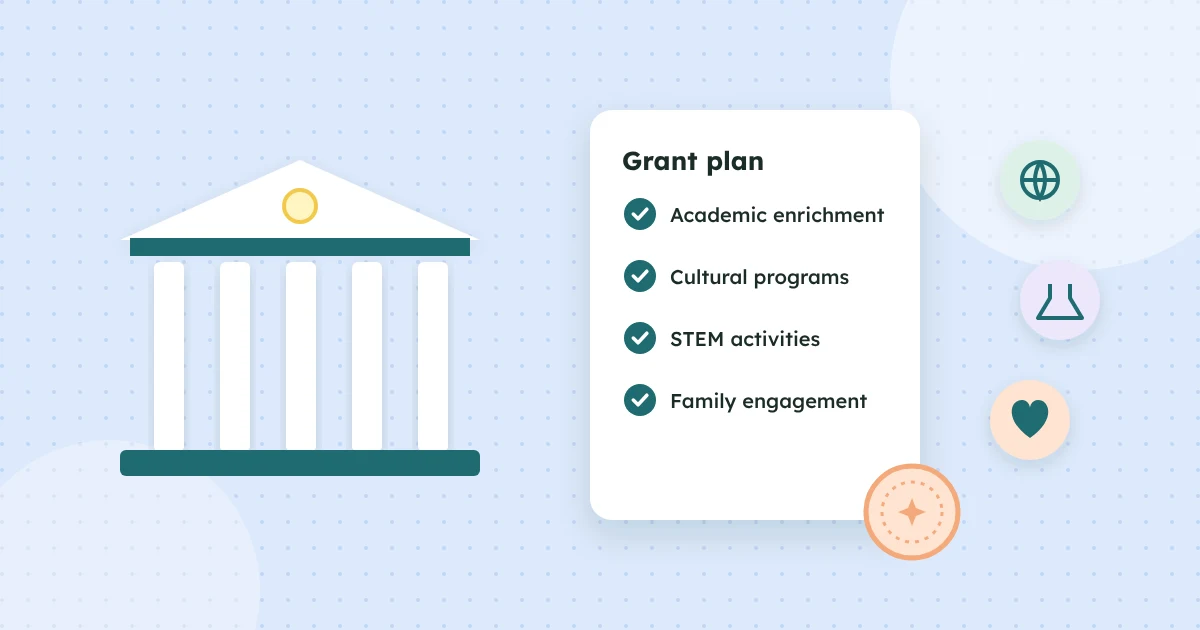
The statute gives community learning centers three purposes. First, to provide opportunities for academic enrichment, including tutoring, to help students meet state academic standards, particularly students who attend high-poverty and low-performing schools. Second, to offer students "a broad array of additional services, programs, and activities," and the law lists them: youth development, service learning, nutrition and health education, drug and violence prevention, counseling, arts, music, physical fitness and wellness, technology education, financial literacy, environmental literacy, mathematics, science, career and technical programs, internships, and apprenticeships. Third, to offer families "opportunities for active and meaningful engagement in their children's education."
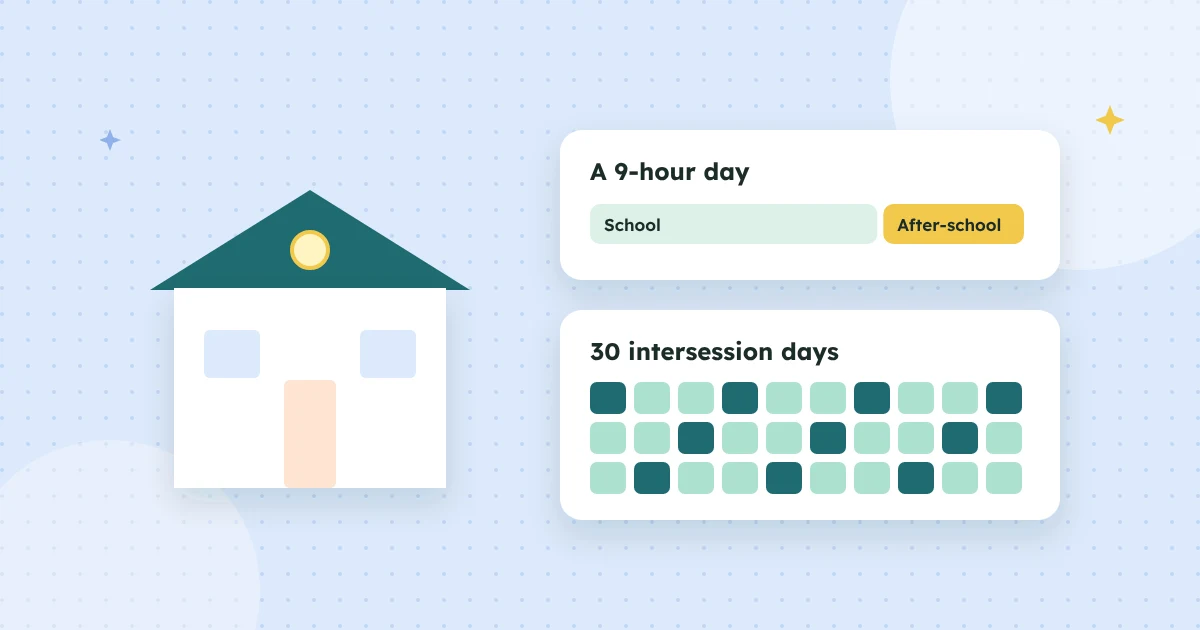
A community learning center, in the statute's words, operates "during nonschool hours or periods when school is not in session (such as before and after school or during summer recess)" and runs activities that reinforce and complement the regular academic program. Funding flows by formula to each state education agency, which runs a competition and awards subgrants to school districts, community-based organizations, faith-based organizations, tribes, other public or private entities, or consortia of these.
Requirements
What 21st CCLC requires of a program
| Requirement | What the law or the Department says | Source |
|---|---|---|
| What the money is for | Academic enrichment during nonschool hours, plus a broad array of additional activities that reinforce and complement the school day. | 20 U.S.C. 7171(a) |
| Who runs programs | School districts, community-based organizations, faith-based organizations, tribes, other public or private entities, or consortia, selected through a state competition. Priority for students at high-poverty and low-performing schools. | 20 U.S.C. 7172; U.S. Department of Education |
| Authorized activities | Fourteen categories, including academic enrichment and tutoring, well-rounded education, literacy, healthy lifestyles, cultural programs, technology education, and STEM programs including computer science. | 20 U.S.C. 7175(a) |
| Principles of effectiveness | Programs must be based on an assessment of objective data, use evidence-based practices, set performance measures aligned with state standards, and be evaluated periodically; results inform improvement and renewal. | 20 U.S.C. 7175(b) |
| Federal performance measures | Five measures, including growth in reading and math (grades 4 to 8), GPA, school attendance, in-school suspensions, and improved learning engagement (grades 1 to 5). | U.S. Department of Education GPRA measures |
| Hours, days, and staffing | The federal statute sets no daily hours, days per year, or staff ratio. Each state writes its own minimums into its competition, so these vary by state. | Title IV, Part B; state RFPs |
| Funding | $1.3 billion for FY2026, level with FY2025; the FY2026 bill signed February 3, 2026 also requires the Department to release state formula funds on time. | Afterschool Network federal update; U.S. Department of Education |
Two things follow from this table. The federal program cares about enrichment as much as tutoring; cultural programs and STEM are named authorized activities, not extras. And the rules a site actually lives under (hours per week, days per year, staffing) come from its state's competition and its own approved application, not from Washington.
The reality
What those rules mean on the ground
A 21st CCLC site has to show, with data, that it is doing what its application promised: a set number of hours, a set number of days, enrichment aligned to standards, and movement on the performance measures. For an elementary site, one of those federal measures is improved learning engagement in grades 1 to 5. Engagement is measured over a year, and a year is made of ordinary afternoons.
Those afternoons are staffed the way after-school is always staffed: part-time, mixed experience, people covering for each other. Attendance shifts. Weather changes. A club gets cancelled. A planned activity ends early. On those days, the program is still open, the hours still count, and the children are still there. Whether that time is enrichment or filler is decided by what the staff member in the room has ready, not by what the application said.
Read why the delivery gap, not the content supply, is the problem.
The options
The no-prep enrichment options programs use
When 21st CCLC directors look for "no-prep" or "plug-and-play" enrichment, the answers they get are usually of two kinds, and they solve different problems.
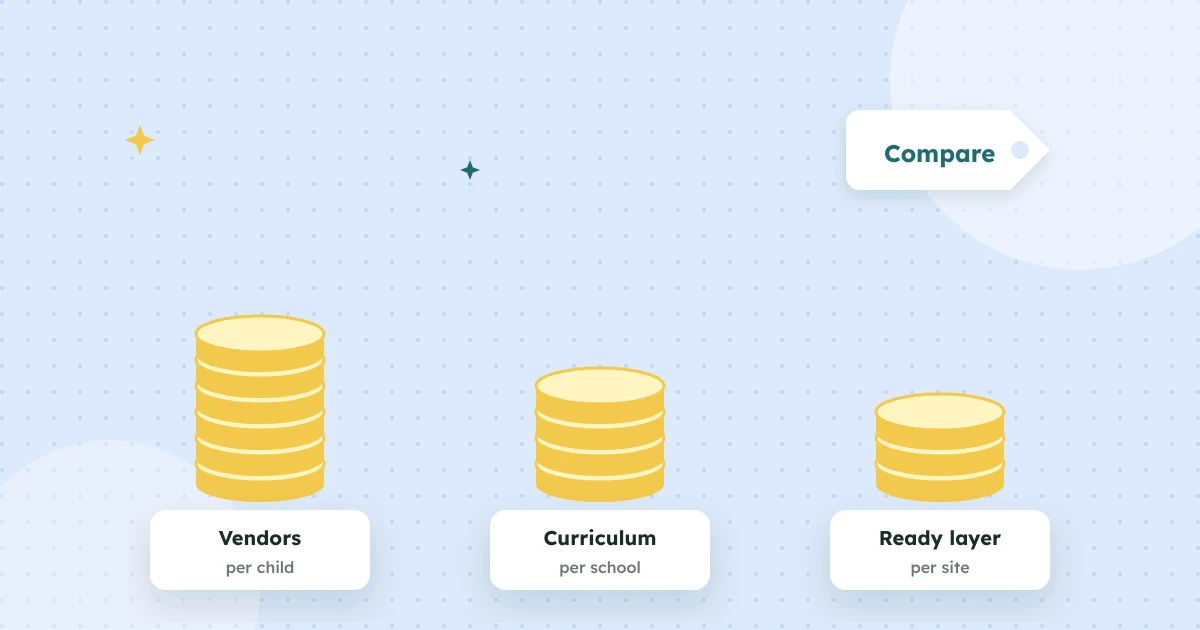
| Option | Who runs it | Prep for your staff | Hours it covers |
|---|---|---|---|
| Enrichment vendors (science, LEGO engineering, coding, cooking, music, and similar) | The vendor's instructor, who comes to your site | Supervision only | The scheduled block, usually 45 to 90 minutes, on booked days |
| Curriculum and activity libraries | Your own staff | Searching, choosing, printing, gathering materials, adapting for the group | The hours your staff have time to plan for |
| A plug-and-play enrichment layer (Belonging Games) | Your own staff, including new, substitute, and part-time staff | None. Open, print or project, run | Every afternoon of the year, including the days a vendor is not there |
A vendor is no-prep for the director, because the booking takes care of everything. On the days the instructor is not there, it covers nothing. A library is abundant, but someone still has to search it, choose, print, and prepare, and that work lands on staff at four in the afternoon. A plug-and-play layer is the only one of the three that removes the preparation from your own staff's hands and covers every day.
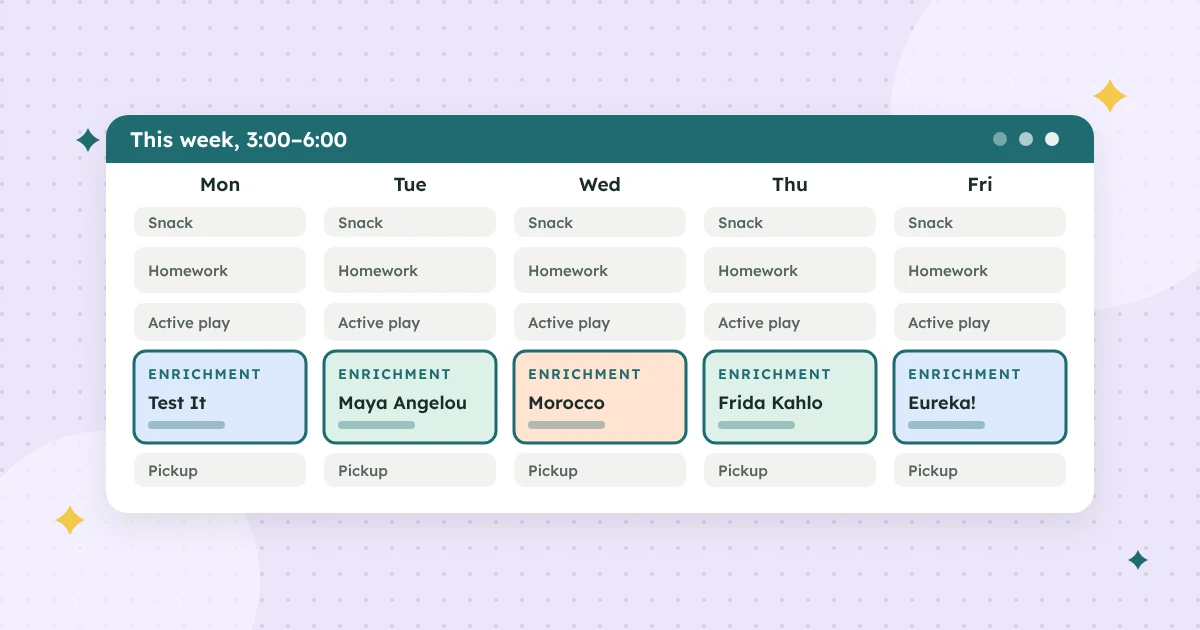
Most sites end up with two layers. Layer 1 is the planned programming: tutoring, curriculum, clubs, and vendors, designed around what the application intends to happen. Layer 2 is ready enrichment your own staff run every day: the daily enrichment block around and between the planned programming, which also holds when the plan cannot proceed, such as a staff call-out, a cancelled club, rain, a homework block that ends early, or a summer day with hours to fill. The two are complementary.
See how vendors and Belonging Games work together, and the full definition of plug-and-play enrichment.
Belonging Games
How Belonging Games fits a 21st CCLC program
Belonging Games, by Enrilo, is a daily, plug-and-play enrichment service for elementary after-school programs. Each day, educators receive 1–3 curated events across cultural, SEL, and STEM themes through their existing Google or Outlook calendar. Every event includes complete, ready-to-run activities (an educator guide, 7 printables, 3 projector activities, and a certificate) that their own staff can lead without planning or preparing from scratch. It gives staff something meaningful to run every afternoon, and the same events are there when the day changes: a staff call-out, a cancelled club, rain, homework finishing early.
Cultural programs and STEM programs are two of the fourteen authorized activities in the statute, and each Belonging Games event is one or the other, or SEL, delivered as hands-on activity rather than instruction. It runs every school day and every summer day. It is built for the staff member who is actually in the room, which is how a site keeps the enrichment hours in its application meaningful across a whole year, not just on the days the plan holds.
Belonging Games is licensed per site for one annual price that covers every educator and every student at that site. Invoices and purchase orders are accepted. Programs funded through 21st CCLC and ELO-P use it as one line item for a complete enrichment layer. Whether a given expense fits your approved application and your state's rules is your grant's decision; your state 21st CCLC coordinator is the right person to confirm it.
FAQ
Questions
Does 21st CCLC fund enrichment, or only tutoring?
Both. The statute's first purpose is academic enrichment including tutoring. Its second purpose is a broad array of additional activities, and the authorized activities list names cultural programs, STEM programs, healthy lifestyle programs, literacy, technology education, and more. Enrichment is in the law, not an add-on.
Who can apply for a 21st CCLC grant?
School districts, community-based organizations, faith-based organizations, tribes, other public or private entities, or consortia of these. Each state education agency runs its own competition and awards the subgrants, with priority for programs serving students at high-poverty and low-performing schools.
Does 21st CCLC require a certain number of hours or a staff ratio?
Not federally. Title IV, Part B sets no daily hours, days per year, or pupil-to-staff ratio. Each state sets its own minimums in its competition, and your approved application is what your site is held to.
What are the 21st CCLC performance measures?
The Department of Education tracks five: growth in reading and math on state assessments (grades 4 to 8), GPA improvement (grades 7 to 8 and 10 to 12), school attendance (grades 1 to 12), reduced in-school suspensions (grades 1 to 12), and improved learning engagement (grades 1 to 5). Grantees also set their own measures under the principles of effectiveness.
Can a 21st CCLC program use outside vendors and purchased enrichment?
Yes. Grantees may use funds to carry out the authorized activities, and partnering with community organizations is part of the program's design. Vendors, curricula, and a plug-and-play layer are all common. What a site buys has to fit its approved application and its state's rules.
Does Belonging Games fit 21st CCLC?
Belonging Games is hands-on cultural, SEL, and STEM enrichment run by the program's own staff, and cultural programs and STEM programs are named authorized activities. Programs funded through 21st CCLC use it as their daily, plug-and-play enrichment. Your state coordinator decides what fits your application.
Is 21st CCLC funding continuing in 2026?
Yes. The FY2026 education funding bill, signed February 3, 2026, funds 21st CCLC at $1.3 billion, level with FY2025, and requires the Department of Education to release state formula funds on time after the delays of July 2025.
Sources
Sources
- U.S. Department of Education, Nita M. Lowey 21st Century Community Learning Centers
- 20 U.S.C. 7171, Purpose and definitions
- 20 U.S.C. 7175, Local activities and principles of effectiveness
- Afterschool Network, Federal Update: FY26 Education Funding Bill Signed
- Afterschool Alliance, 28 years of impact: 21st CCLC
Requirements summarized as of October 2026. Statutes, appropriations, and Department guidance change; confirm current rules with the Department's page and your state 21st CCLC coordinator.