This page is for the site coordinator who lives that afternoon most weeks. It explains why good activities fail in a substitute's hands, how to tell a training problem from a design problem, and what new or covering staff actually need in order to run something meaningful on short notice.
The hidden assumption
Every activity is written for someone
Behind every enrichment resource is an implied facilitator: a person with some assumed experience, some assumed preparation time, and some assumed familiarity with how the activity is supposed to go. The assumption is rarely stated, but it is built into how much the instructions explain, how much judgment they leave open, and how much context they take for granted.
When that person is in the room, the activity goes well. When the person in the room is a substitute meeting the group for the first time, or a new hire in their second week, or a staff member pulled in ten minutes ago to cover, the same activity becomes fragile. Not because the person is inadequate, but because the design was built for a different person. The mismatch was in the resource the whole time. Variable staffing only revealed it.
After-school is staffed this way by design, not by accident. Part-time roles, early-career staff, college students, specialists who come once a week, and substitutes are the normal shape of the field, and a team changes over the year. Staffing variability is a recurring operating condition, which means an activity that works only in the hands of its implied expert will come up short on a schedule.
Read Staffing as a Design Constraint.
The test
Training problem or design problem?
The usual response is training, and training matters. Staff should be developed and supported. But two kinds of failure look alike and are not.
A training problem is one where a specific person could deliver well with more skill, and where that development durably closes the gap. A design problem is one where the resource requires a level of preparation or expertise that the operating reality will not reliably supply. Training can narrow that gap, but it cannot close it permanently, because the gap reopens with every new hire, every substitute, and every change in the team.
The test: if making an activity reliable would require every person who might plausibly run it to be trained to a high bar, and the set of those people keeps turning over, the problem is design, not training. Treating it as training means retraining forever to hold delivery at the level the design took for granted.
What they need
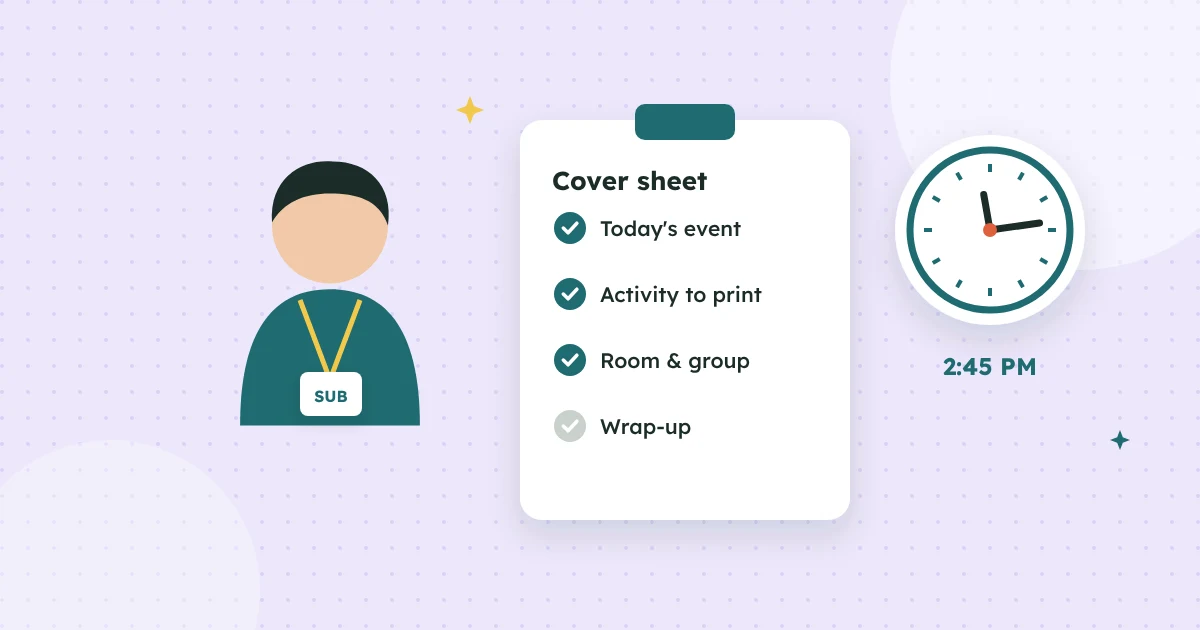
What a substitute actually needs at 2:45
| What they need | Why it matters | What usually goes wrong |
|---|---|---|
| Today's activity already decided | Choosing is the work. A sub cannot evaluate options for a group they have not met. | They are handed a binder or a folder and told to pick something. |
| No materials to gather | Sourcing takes the minutes they do not have, and the closet may not have it. | The activity assumes supplies that were never checked. |
| Instructions readable in a minute | They are reading while the children arrive. | A two-page plan written for someone who has run it before. |
| No dependence on last week | A sub has no context for a sequence. | Day three of a five-day unit with no recap. |
| Works with whoever shows up | Attendance and age mix are unknown to them. | Fixed group sizes or stations built for a specific roster. |
| Something to print or project | Either one is a two-minute step. Anything else is not. | A link to a platform they do not have a login for. |
Notice what is not on the list. The sub does not need to be an expert, and does not need to be perfect. They need the operational work (selecting, sourcing, adapting, setting up) to have been done before the activity reached them, so the only work left is the human work: reading the room, leading, and being present with the children. That part they can do.
This week
Four things a coordinator can do this week
1. Decide tomorrow's activity today.
Before you leave, know what the enrichment block is tomorrow and leave it where the person covering will stand, printed, with the room's name on it. If someone calls out, the plan does not leave with them.
2. Write a one-page cover sheet for the block.
Group name, where materials live, the two or three children who can help a new adult, how transitions work, and where the activity is. One page, laminated, updated once a month. Most of a substitute's stress is not the activity; it is not knowing the room.
3. Keep a standing printable in every room.
One activity that needs nothing but paper and pencils, that any adult can lead on sight. It is not the plan. It is what keeps the afternoon from becoming free time while the plan is found. Twelve candidates are on our no-prep ideas page.
4. Run the design test on your resources.
For each activity you rely on, ask: could the person most likely to be covering run this well in about five minutes, without me? If the honest answer is no, that is not a reason to train harder. It is a reason to change the resource.
See twelve no-prep enrichment ideas.
Consistency
Consistency without heroics
If quality depends on the room always having an experienced, prepared facilitator, then consistency depends on staffing being steadier than an ordinary week allows, and it will hold only on the good days. If instead the system supplies the selection, the materials, and the readiness, then quality rests on the system rather than on getting the right person every time.
That is what plug-and-play enrichment is for. Not to reduce what staff bring, but to stop requiring them to bring what the staffing model cannot promise on any given day. A new hire and a substitute start from the same floor as the experienced lead. The experienced lead still does more with it. The floor holds either way.
Read the full definition of plug-and-play enrichment.
For the day itself, read what to do when the after-school plan falls through.
Belonging Games
Built for the person actually in the room
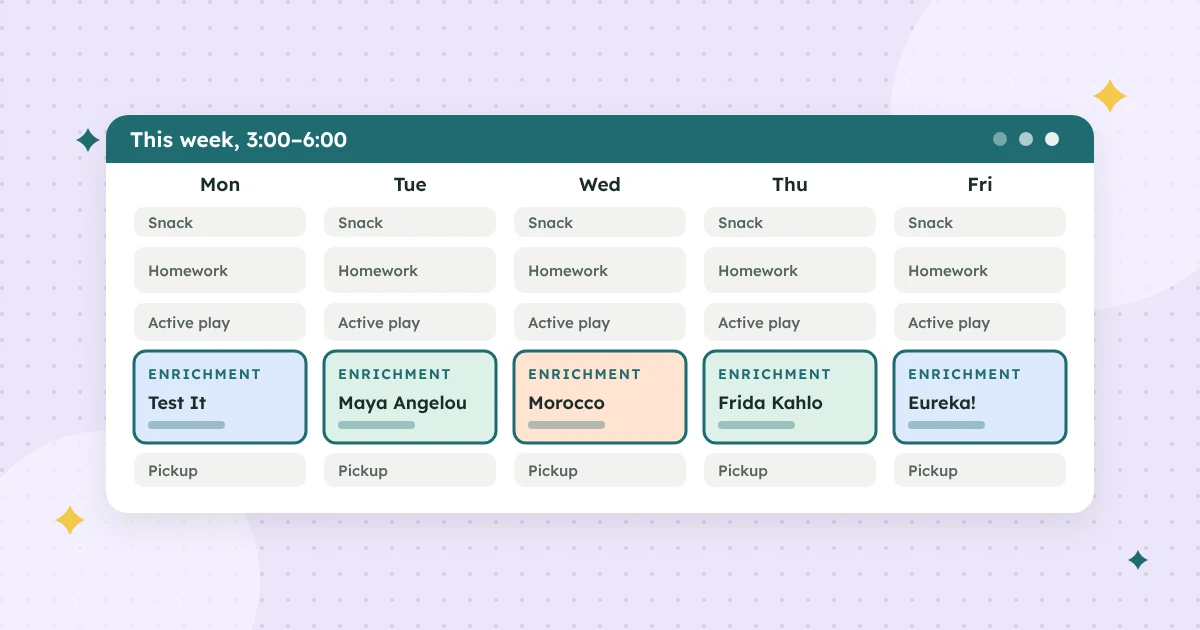
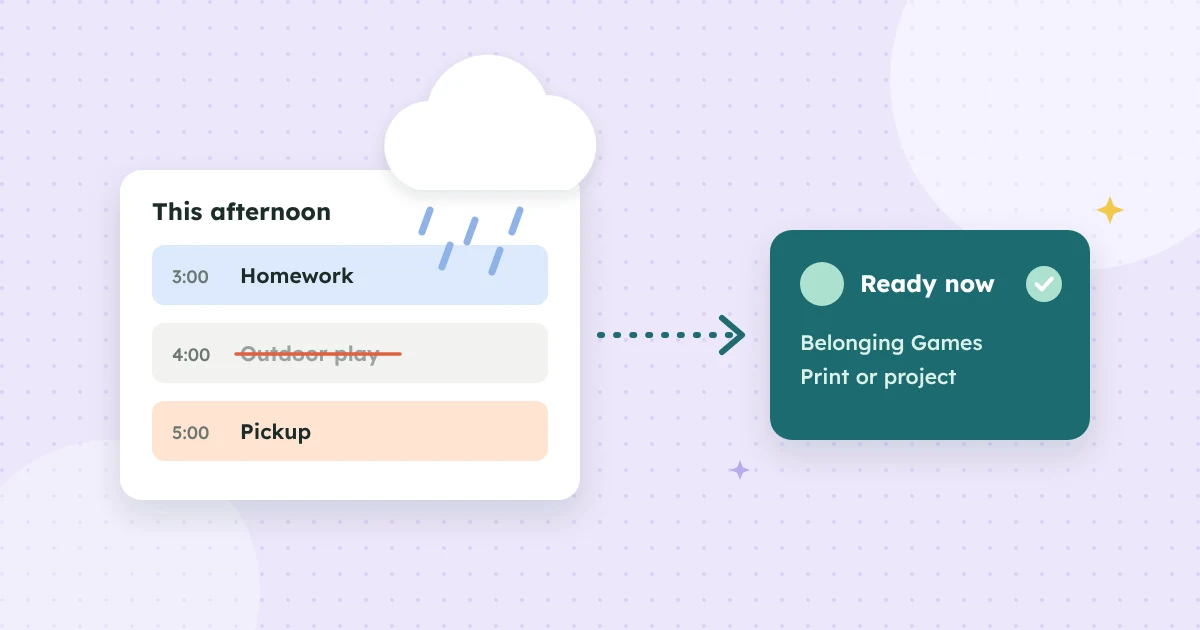
Belonging Games, by Enrilo, is a daily, plug-and-play enrichment service for elementary after-school programs. Each day, educators receive 1–3 curated events across cultural, SEL, and STEM themes through their existing Google or Outlook calendar. Every event includes complete, ready-to-run activities (an educator guide, 7 printables, 3 projector activities, and a certificate) that their own staff can lead without planning or preparing from scratch. It gives staff something meaningful to run every afternoon, and the same events are there when the day changes: a staff call-out, a cancelled club, rain, homework finishing early.
On a call-out day, the coordinator opens today's event in the team calendar, prints or projects it, and hands it over. Today's 1–3 events are already curated, the same ones the team runs every other afternoon, each with 7 printables and 3 projector activities that fit the day; nothing has to be gathered, the educator guide reads in a minute, and no day depends on the one before it. The substitute's job is the children. That is the job they are good at.
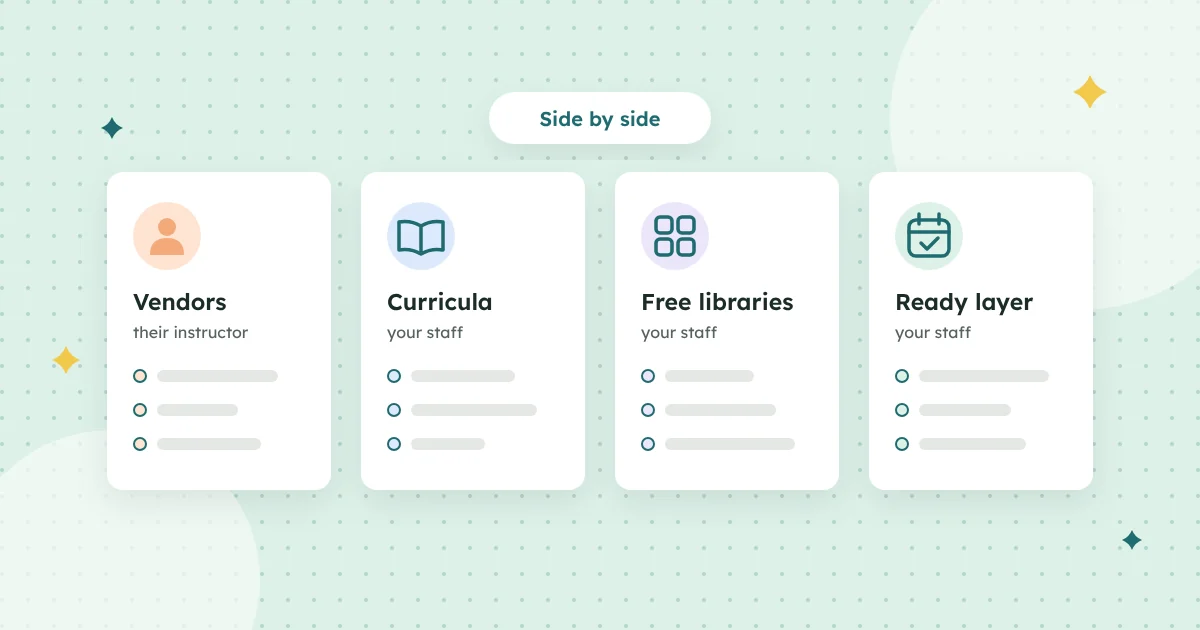
See how programs use Belonging Games alongside their vendors and clubs.
To see how much unplanned time your program carries in a year, try the Unpredictability Calculator.
FAQ
Questions
Why do good activities fail when a substitute runs them?
Because most activities carry an implied facilitator who is more experienced and more prepared than the person a program can reliably expect to have in the room. When a substitute or new hire runs the same activity, the preparation it assumed was done is not done, and the activity becomes fragile. It is a design mismatch, not a failing of the person.
Is this a training problem?
Sometimes. If one specific person would deliver well with more skill, train them. But if making an activity reliable would require everyone who might ever run it to be trained to a high bar, and that set of people keeps turning over, the cause is the design of the resource, and training alone cannot fix it.
What should a substitute be handed at the start of the enrichment block?
Today's activity, already chosen, printed or ready to project, with instructions they can read in a minute, needing no materials they have to find and no knowledge of what the group did last week. Plus a one-page cover sheet about the room.
Can new or part-time staff run meaningful enrichment?
Yes, when the operational work has been removed from their hands. Selecting, sourcing, adapting, and setting up should be done before the activity reaches them. Leading the activity, reading the room, and being present with children is the human work, and new staff can do it well.
How does Belonging Games help on a call-out day?
Every day already has 1–3 curated cultural, SEL, or STEM events in the team's Google or Outlook calendar, each with 7 printables, 3 projector activities, and a short educator guide. Most programs run them every day, so on a call-out day nothing is unusual: the coordinator opens today, picks the event that fits the group, prints or projects it, and hands it to whoever is covering. No searching, no gathering, no password, and no dependence on the previous day.
Does this replace staff training?
No. Training develops people, and it should continue. A plug-and-play layer removes the operational preparation that variable staffing cannot guarantee, so training can focus on facilitation and relationships instead of on learning to assemble activities under pressure.