The unit
What does "per student per day" mean?
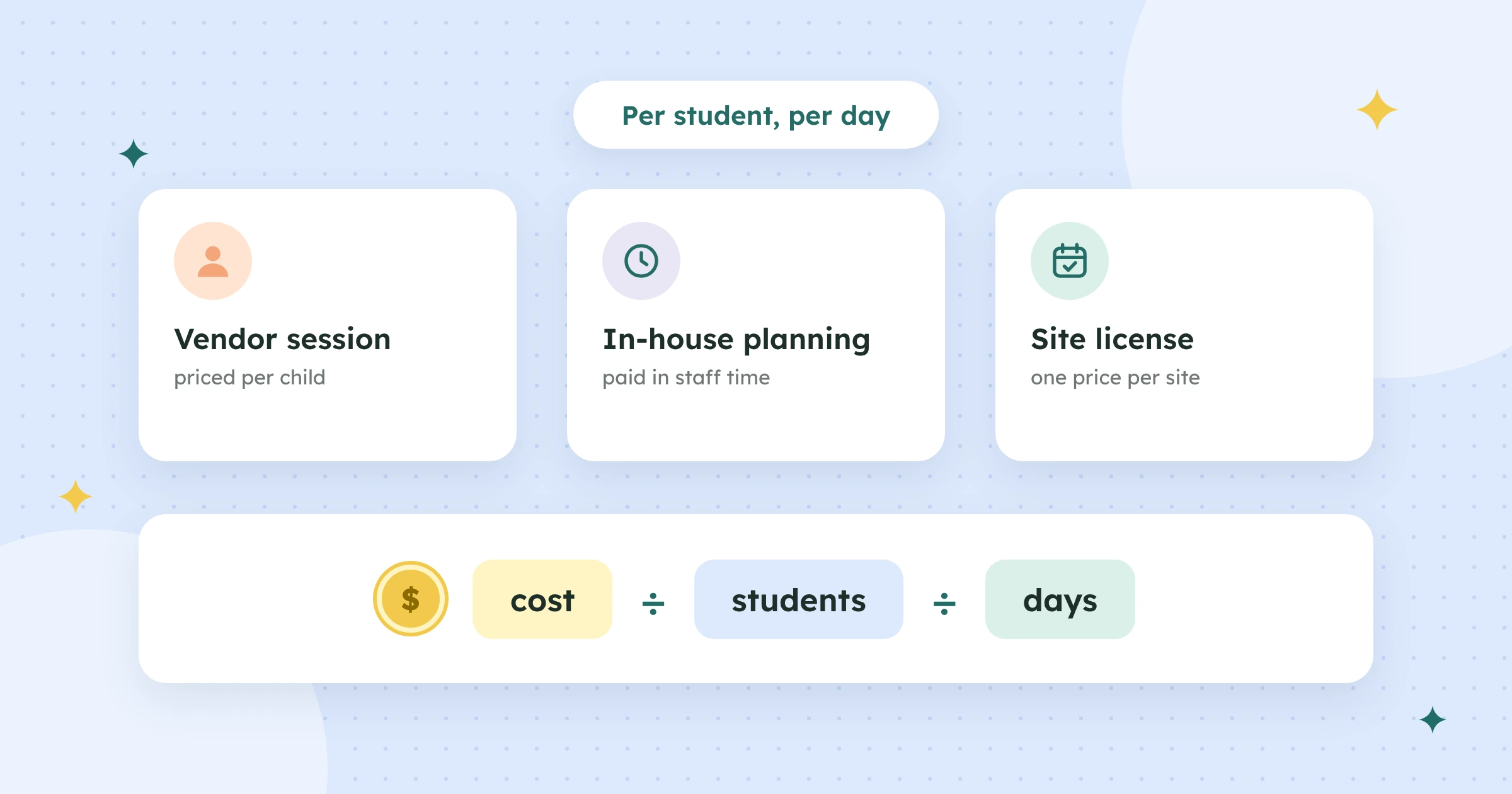
It is a cost divided by the number of children and the number of days it applies to:
cost ÷ students ÷ days
The unit is useful because vendors charge per child, staff are paid per hour and licenses are sold per site, and those are hard to weigh up until they are in similar terms. But the "students" and "days" differ by option, so every figure on this page says which it uses:
- Per participating child, per session: only the children enrolled, only the days an instructor comes.
- Per child, per day planned: the children in a group, on the days staff prepare an activity.
- Per enrolled child, per available day: every child at the site, on every day activities are available, whether or not they are used.
- Per enrolled child, per day used: the same license divided by the days educators actually run the activities.
The unit measures price, not quality or what is included. For curriculum licenses and kits, see what after-school enrichment costs.
At a glance
What does each option cost, and what does the figure measure?
| Outside vendor | In-house planning | Belonging Games | |
|---|---|---|---|
| What you pay for | An instructor-led session, with the vendor's materials | Your staff's paid time to find and prepare activities | A license for prepared daily activities your staff lead |
| How it is priced | Per child per program | Per staff hour | Per site per year |
| Published figure | $72 to $165 per child for six one-hour sessions (two Mad Science franchises, as examples) | $18.15 median hourly wage for childcare workers in schools (BLS, May 2025) | $3,650 per site per year |
| Figure per student | $12 to $27.50 in those two examples | $0.23 to $0.91 | $0.14 to $0.51 |
| What that figure measures | Cost per participating child per instructor-led session | Planning wages per child per day planned, for 15 to 60 minutes per group of 20 | License cost per enrolled child per available day, for sites of 150 down to 40 children over 180 days |
| Includes delivery? | Yes: the instructor leads | No: your staff also lead | No: your staff lead |
| Not in the figure | Facility fees; the other days of the week | Benefits and payroll costs; supplies; paid resources; time to lead | Your staff's time to choose, set up and lead; printing and basic supplies |
Do not read across the "figure per student" row as if it were one price list. A vendor's $12 includes a specialist teaching the session. The license's $0.34 does not include anyone leading the activity, and it assumes the activities are available on all 180 days. Prices were checked on November 16, 2026; the wage is the latest published by the Bureau of Labor Statistics.
Your number
How do you work out the cost for your own program?
The figures on this page are examples. Yours will differ, and four steps will get you there.
1. Count the children and the days
Use the children an option actually reaches and the days it actually runs. A club reaches its enrolled children on its session days. A site license is available to everyone, and is used on the days your staff run it.
2. Get each price in its own unit
Ask a vendor for the price per child and the number of sessions. Use your real hourly wage, with benefits if you can. Use the license price per site.
3. Divide
Vendor: price per child ÷ sessions.
In-house: planning minutes ÷ 60 × wage ÷ children in the group.
License per available day: annual license price ÷ enrolled children ÷ available program days.
License per day used: annual license price ÷ enrolled children ÷ days the activities are actually used.
4. Write down what is missing
Who leads, facility fees, supplies, printing, unpaid planning time, and who pays. A parent-paid club and a program-paid license are not the same kind of cost.
The next three sections show the same steps with published figures.
Vendor
What does a vendor cost per participating child per session?
A vendor sends its own instructor for a booked session and charges per child. Two Mad Science franchises publish prices for a six-week club that meets one hour a week:
- Greater Salt Lake: $72 per child, plus any facility fee. $72 ÷ 6 sessions = $12 per participating child per session.
- Long Island: from $165 per child. $165 ÷ 6 sessions = $27.50 per participating child per session.
A child who stays in a club for all six cycles of a 36-week year costs $432 to $990, assuming the same price and available sessions throughout the year. Spread across 180 program days, that is $2.40 to $5.50 per participating child per program day, for one expert-led hour a week.
Three things to keep in mind. Many vendor clubs are paid by parents through registration, so the cost to the program can be close to zero. The figure applies only to enrolled children; Mad Science St. Louis gives a typical class size of 10 to 20 students per instructor. And most other vendors, including Kodely, Play-Well and LIFT Enrichment, quote on request, so ask for a per-child, per-session figure when you compare. For what vendor terms cover, see Belonging Games vs hiring an enrichment vendor.
In-house
What does in-house planning cost per child per day planned?
When staff use free resources or materials the program already owns, the main additional cost of preparing activities is staff time. Paid curricula, subscriptions and supplies come on top.
planning minutes ÷ 60 × hourly wage ÷ children in the group
The Bureau of Labor Statistics puts the median hourly wage for childcare workers employed by elementary and secondary schools at $18.15 in May 2025 ($16.82 across all childcare workers, a group that includes staff who look after school-age children before and after school). We found no published figure for how long after-school staff spend planning enrichment, so the table shows three assumptions. Use your own.
| Planning time per educator, per day | Wage cost per group per day | Per child per day planned (group of 20) | Per site per year (3 educators, 180 days) |
|---|---|---|---|
| 15 minutes | $4.54 | $0.23 | $2,450 |
| 30 minutes | $9.08 | $0.45 | $4,901 |
| 60 minutes | $18.15 | $0.91 | $9,801 |
These are wages only. Benefits and payroll costs come on top. If your staff plan on unpaid time, the cost does not appear in your budget at all, but someone is still carrying it.
In-house planning is often the lowest-cost option in dollars, and it can be the best one: nobody knows your children better than the people in the room. Its weak point is not price but consistency. It depends on someone having the time every day, including the days with call-outs and substitutes.
Belonging Games
What does Belonging Games cost per enrolled child?
Belonging Games is $3,650 per site per year. The license covers every educator and every child at the site, so it is a predictable annual cost that does not rise with enrollment, and the per-child figure falls as the site gets bigger.
$3,650 ÷ children at the site ÷ days
| Children at the site | Per child per year | Per child per available day (180 days) | Per child per day used, if used on 90 days |
|---|---|---|---|
| 40 | $91.25 | $0.51 | $1.01 |
| 60 | $60.83 | $0.34 | $0.68 |
| 100 | $36.50 | $0.20 | $0.41 |
| 150 | $24.33 | $0.14 | $0.27 |
These figures spread the cost across all enrolled children. They are not the cost per child who takes part: if a site regularly uses the activities with only some of its children, the cost per participating child is higher.
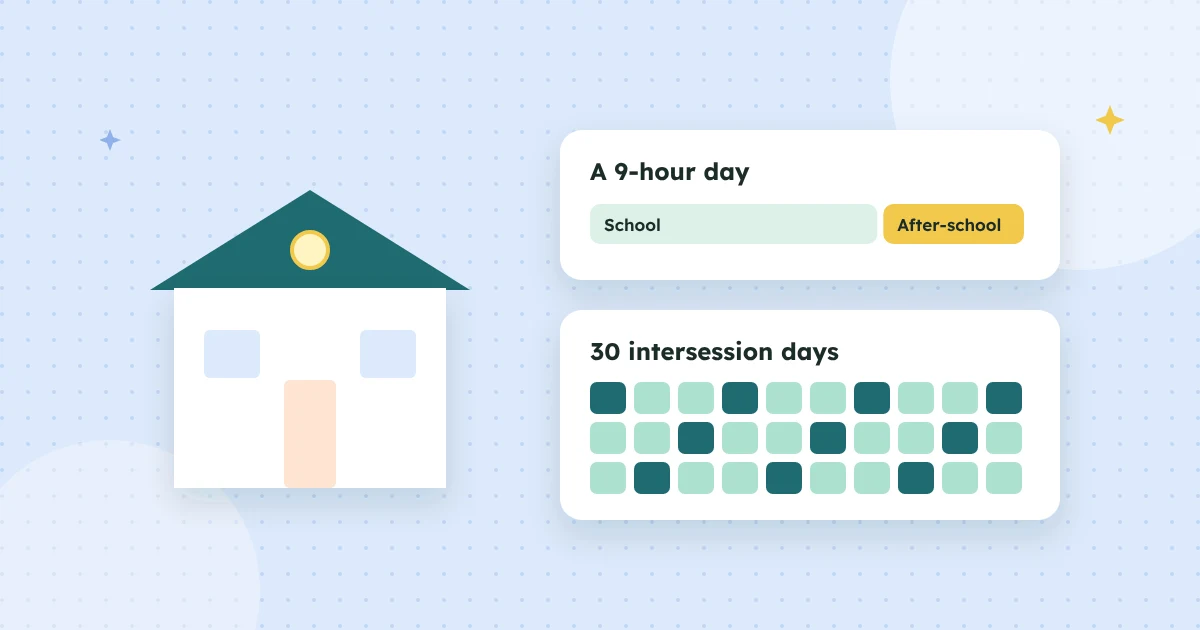
For the whole site, the license is about $20 per available program day. Each day, 1–3 curated events arrive in your team's Google or Outlook Calendar, each with an educator guide, 7 printable activities, 3 projector activities and a certificate.
The price is the license, not the full cost of delivery. Your staff still choose an event, open or print the files, set up a projector if they use one, and lead the activity, and you supply printing and basic supplies. A 30-day pilot at one site is $600, credited to the annual license if you continue.
Time equivalent
How much staff planning time equals the cost of a license?
At the example wage of $18.15 per hour, the $3,650 annual license is equivalent to approximately 67 minutes of combined staff time per program day over 180 days. For a site with three educators, that is about 22 minutes each.
If Belonging Games removes that much preparation work, the value of the time saved equals the license cost. Whether this produces actual budget savings or simply gives existing staff more time for children depends on how your program is staffed. If your educators are already paid for their full shift, a license will not usually reduce payroll; it changes what those minutes are spent on.
Two cautions. The license does not remove all preparation: someone still picks the event and gets the files ready. And the equivalence is only about time and money. It says nothing about which activities are better for your children, or whether in-house planning reliably happens on a hard day.
One site
What does this look like for one site?
Take a site with 60 children in grades 1–5, three educators and 180 program days.
| Option | What the site gets | Cost for the year | Figure per student, in its own unit |
|---|---|---|---|
| One weekly vendor club | 36 instructor-led hours for 20 enrolled children | $8,640 to $19,800 if the program pays; little or nothing if parents pay | $12 to $27.50 per participating child per session |
| In-house planning | Whatever each educator prepares, on the days there is time | $2,450 to $9,801 in wages, for 15 to 60 minutes of planning each per day | $0.23 to $0.91 per child per day planned |
| Belonging Games | 1–3 prepared events available on each of the 180 days, for all 60 children, led by the site's own staff | $3,650 | $0.34 per enrolled child per available day; $0.68 per day used if run on 90 days |
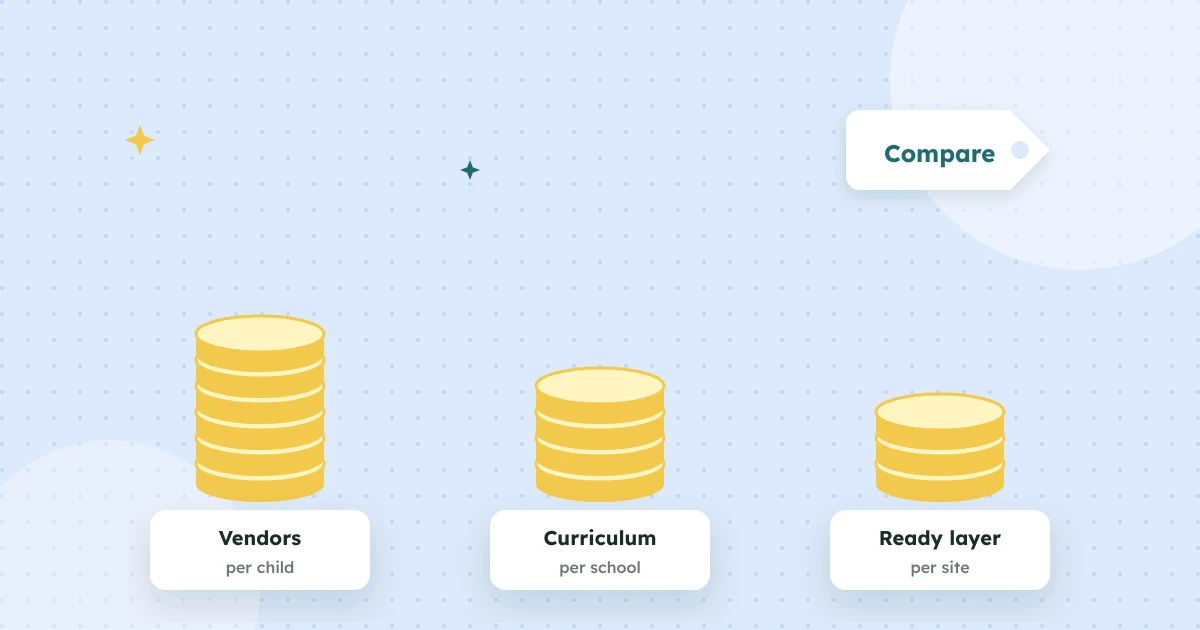
The vendor line is an illustration from published franchise prices, not a quote, and assumes six cycles at an unchanged price. The three lines are not rivals for the same budget: many sites pay for a club and still need something for the other days. Belonging Games is built as that second layer. What it offers is a predictable annual content cost, less preparation for educators, and a daily set of cultural, STEM and SEL themes that gives children new things to discover. Its value is that combination of staff capacity, consistency and meaningful activities, not the lowest possible price.
See it for yourself: Explore Japan Culture Day, a complete enrichment pack with all 12 files available without an account. Or browse the live calendar to see what Belonging Games offers each day.
Related: What after-school enrichment costs · Belonging Games vs Mizzen · ELO-P enrichment · 21st CCLC enrichment · Book a demo
FAQ
Questions
How much does after-school enrichment cost per site?
It depends on the route. As illustrations for a 60-child site over 180 days: one weekly vendor club for 20 children comes to $8,640 to $19,800 a year at published Mad Science prices if the program pays; in-house planning costs $2,450 to $9,801 a year in staff wages for 15 to 60 minutes of planning per educator per day; a Belonging Games site license is $3,650, with your staff leading the activities.
How much does Belonging Games cost per student?
$3,650 per site per year, divided by the children at the site. For 60 children that is $60.83 per child per year, or $0.34 per enrolled child per available day over 180 days. If the activities are run on 90 of those days, it is $0.68 per child per day used.
Is it cheaper to plan enrichment in-house?
In wages, often yes. At the median school childcare wage of $18.15 an hour, a $3,650 license equals about 67 minutes of combined staff time per program day. A site that spends less than that on planning pays less in wages than the license costs. The figure leaves out benefits, supplies and whether the planning reliably gets done, and a license frees staff time rather than cutting payroll.
What is affordable enrichment for a Title I after-school program?
The lowest-cost routes are a free activity library such as Mizzen, which costs nothing to license but takes staff time to choose from, and a parent-paid or grant-paid vendor club. A site license such as Belonging Games comes to well under a dollar per enrolled child per available day at the site sizes shown above. Compare them on staff time as well as price.
Can ELO-P or 21st CCLC funds pay for enrichment?
Both programs fund enrichment: California's ELO-P funds after-school and summer enrichment programs, and 21st CCLC supports centers that provide academic enrichment outside school hours. Whether a particular purchase is allowable depends on the grant, the approved program plan and local procurement rules. Confirm with your district or grant administrator before you buy. Our ELO-P and 21st CCLC guides cover each program.
Sources
Sources
- Mad Science Greater Salt Lake, After-school programs: $72 per child for six one-hour sessions, plus facility fee; who pays (checked November 16, 2026)
- Mad Science Long Island, After-school programs: from $165 for a six-week program (checked November 16, 2026)
- Mad Science St. Louis, After-school programs: typical class size of 10 to 20 students per instructor (checked November 17, 2026)
- U.S. Bureau of Labor Statistics, Occupational Outlook Handbook: Childcare Workers: median hourly wage of $16.82, and $18.15 in elementary and secondary schools, May 2025 (checked November 17, 2026)
- California Department of Education, Expanded Learning Opportunities Program FAQs: what ELO-P funds (checked November 16, 2026)
- U.S. Department of Education, Nita M. Lowey 21st Century Community Learning Centers: what 21st CCLC supports (checked November 16, 2026)
- Belonging Games pricing: $3,650 per site per year, $600 pilot, what each event includes (checked November 16, 2026)